WWW.RADIOSOND.COM
|
|
|
What
is RADIOSOND?
|
|
A radiosonde is a device for
studying any medium. In other words, it is a probe that moves either in
the atmosphere, or in water, or inside some body, measures the
parameters of the environment within which it moves and transmits these
parameters in the form of radio signals to the receiving station.
|
|
|
|
Radiosonde is most widely used
in atmospheric sounding. The first radiosonde, in its classical form
(measurement of temperature, humidity) was created in the early 1930s
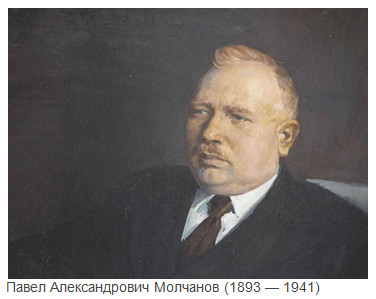
by Professor
Molchanov. This radiosonde gave an impetus to many engineers,
scientists,
and researchers to develop new instruments for studying the atmosphere.
Professor Molchanov, in his work, in those distant years (almost 100
years
ago) attended various international conferences and symposia. After
all,
the development of science is impossible without broad international
cooperation.
But unfortunately, the life of Professor Molchanov, who did so much for
the development of radiosounding in the USSR, ended with the shot of a
guard when he tried to go out on the deck of the steamer to get some
fresh
air, when the steamer was taking him to a distant concentration camp.
For
his international contacts and speeches at conferences, he was declared
an enemy of the people and was subject to either execution or sending
to
a concentration camp.
|
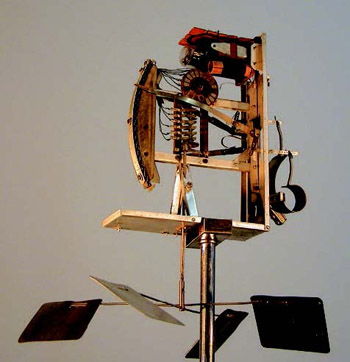
Professor Molchanov's radiosonde
|
|
|
In the early 1970s, I studied
at the Moscow Hydrometeorological College, majoring in radio technician
of
radar stations for sounding and atmospheric research. Of course, we
were not told the fate of Professor Molchanov in those years. And the
building of the hydrometeorological college was located on the site of
the estate of the famous industrialist and scientist Ryapushsky, a
great man who did a lot for the development of aviation in the world. I
write "in the world" because after the revolution of 1917, he left,
like many scientists who did not accept the revolution, to France,
where he successfully worked
in the field of aviation sciences. This is the fate of two famous
scientists.
|
|
|
|
|
By the way, I read
an interesting phrase on the Internet: scientists, engineers, and
aviators who
left for the West after the Revolution conquered the skies there, but
if they
had stayed in Russia, they would have ascended to heaven.
|
|
|
|
Returning to Ryapushinsky, it should
be noted that in the city of Zheleznodorozhny, Moscow region, there is
a monument
to Ryapushinsky, and not far from it there is a monument to Lenin,
because
of whose activities Ryapushinsky went to France and developed aviation
there.
There is a lot to be said about this topic. The fate of many scientists
(the
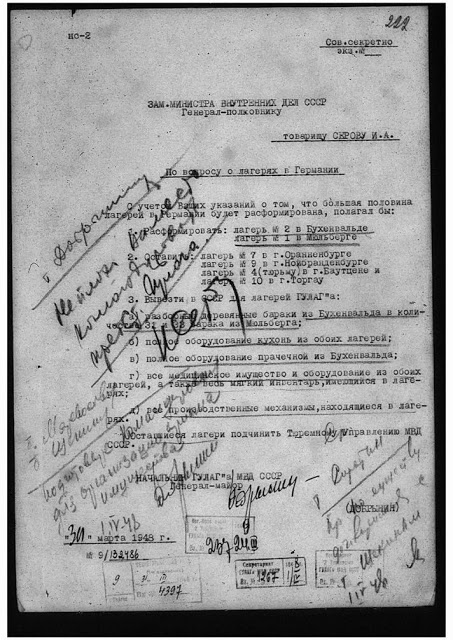
list is endless) ended in Soviet Russia in a concentration camp. On
this
topic, it is worth reading, for example, Solzhenitsyn, his "Gulag
Archipelago". For those who do not know how the word GULAG is
deciphered, I write: Main Directorate of Camps. Not pioneer. Not scouts.
|
|
|
|
<>Some comrades say
Solzhenitsyn wrote a lot of untruths, but my father, who served as
secretary of
the party organization of a military unit in the MVD convoy troops (the
Gulag
Archipelago) from 1947 to 1949, respected him. My father always told me
that
Solzhenitsyn described everything correctly. In the late 1980s, he
bought me
his book, "The Gulag Archipelago." I started reading it, but it
didn't really take off; it seemed too boring. Fifteen years later, I'd
read all
the volumes. I wish the conditions described in that book would never
return.
|
|
|
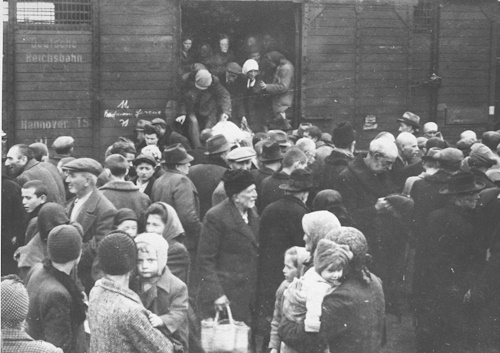
One day in late
January, I was in Verona, a beautiful city in northern Italy with a
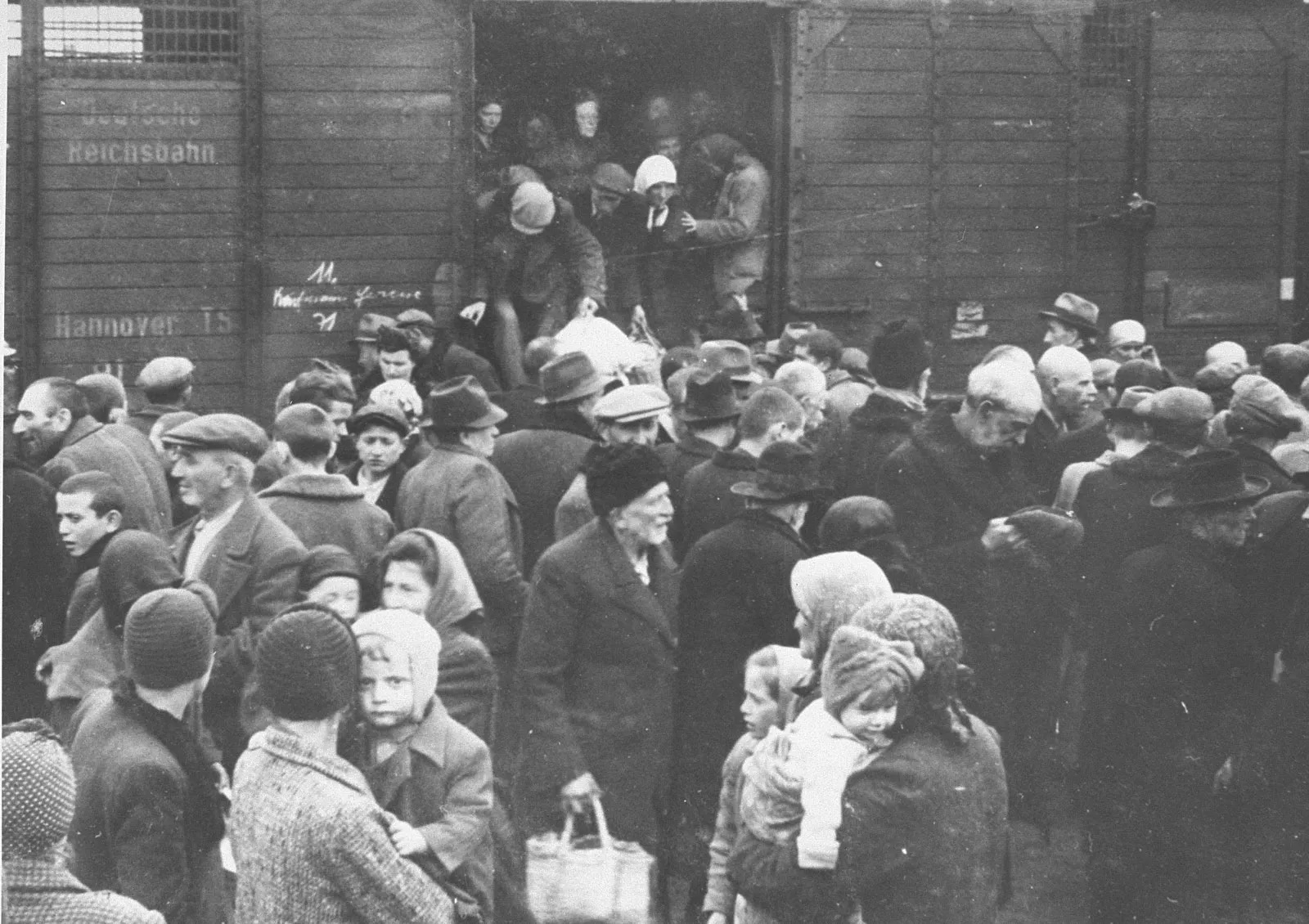
millennia-long history. That day, a freight car was brought to Verona's
central
square on a trailer. It was
carrying Italians and Jews from Verona and its
surrounding areas, who were being transported to German concentration
camps
during World War II.
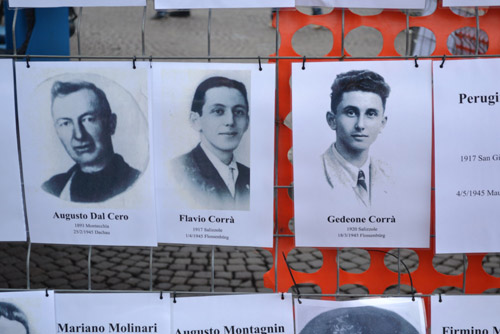
Portraits of
people, residents of Verona, exterminated in these camps were hung
around the
train car. Just photographs, with their birth and death dates and the
name of
the camp. People approached, looked, pondered, and then moved on. A
very good
visual reminder to prevent such a thing from happening again. Look at
these
photographs—year of birth 1917, year of death 1945. Young people—they
should
have lived and lived! For what?
|
|
|
|
|
|
<>So, what did
Molchanov, Vavilov, and many others die for?
Unfortunately, we
will never know anything about many of the people who perished in the
camps.
The generation that could have told us how the war went, what really
happened,
is already gone. And they hardly ever said anything. My dad never spoke
about
the war, which he fought through almost the entire time and was wounded
many
times.
|
|
|
<>After graduating
from the Moscow Pharmaceutical Institute, my mother was assigned to
work in
Germany. She worked there from 1947 to 1951. She never said what she
did there.
She would say she worked as a pharmacist in Germany. My cousin Anya
still
believes that Aunt Rita rebuilt a pharmacy chain in Germany; my uncle,
my
mother's brother, told her so.
As I understand it,
it was a legend. The first time the veil of secrecy lifted was in 1979,
when my
friend Slava Gubin tried to persuade me to transfer to the Institute of
Pulse
Technology for a higher salary. There was one caveat, though: I had to
go on
business trips to Novaya Zemlya, to the nuclear test site. We were
young, and
what a surprise!
I told my mother.
She gave me a political education, telling me that after Germany, where
she
worked at a uranium plant, her hair had started falling out. And at
work, in
the HR department, they explained to us that if we quit, the next day
we'd be
drafted into the army and sent to this Novaya Zemlya as privates, not
specialists.
It was only after
my mother's death, about 15 years later, that I was sorting through her
papers
and found a certificate with the number of the military unit where she
worked
in Germany. After searching the unit number online (the internet is a
great thing,
sometimes), I learned that it belonged to AO Wismut, an enterprise that
mined
uranium in Thuringia and shipped it to the USSR for processing.
At some crossings
on the Soviet-Polish border, where railcars crossed, the tracks were
littered
with uranium ore, which emitted significant radiation. A specialized
company
periodically cleaned the tracks.
|
|
And now to
radiosondes.
<>But let's make one
more note. The inventor of the radiosonde, Pavel Alexandrovich
Molchanov, lived
for 48 years. And he was killed by a guard. And yet, how much he could
have
accomplished in the field of atmospheric sounding!
|
Как мы указали вначале - радиозонд - это
электронное устройство, предназначенное для сбора информации и передачи
по радиоканалу на приемную станцию.
|
|
|
|
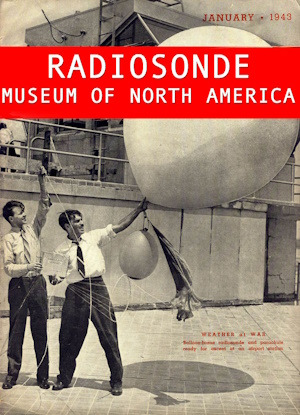
На фото справа показан пуск
радиозонда на военно-морской базе Кваджелейн во время ядерных испытаний
на атолле
Бикини в 1946 году.
|
|
Сайт WWW.RADIOSOND.COM посвящен
подводному радиозонду, который работает на дне кислотных вулканических
озер, и измеряет уровень радиации и радона, и передает эту информацию в
реальном режиме времени по радиоканалу на береговую приемную станцию.
Этот подводный радиозонд работает в
экстремальных условиях, практически в электролите, подобно тому, что
залит в аккумуляторы наших автомобилей.
|
|
Да и температура на дне
некоторых вулканических озер может превышать температуру 100 градусов
Цельсия.
Жесточайшие условия для работы. И глубина до 300 метров.
Для изготовления корпуса радиозонда
практически подходят только специальные пластики и нержавеющая сталь
хорошего качества.
|
|
|
|
|
|
|
|
|
|
|
|
|
|
|
|
|
|
|
|
|
|
|
|
|
|
|
|
|
|
|
|
|